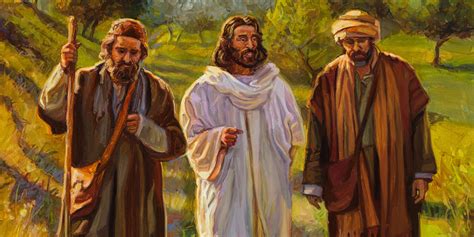
The story of the two disciples on the road to Emmaus is themasterpiece of Luke (24:13-35). It is one of the most beautiful of the Resurrection appearance stories in the New Testament. It contains all the ingredients of Christian life. It points to the two major parts of the Holy Mass: the liturgy of the Word and the liturgy of the Eucharist. It begins with the two disciples going to a village seven miles from Jerusalem called Emmaus. The two disciples represent all of us because we are all travelers and pilgrim people. But they are walking away from Jerusalem. For Luke, Jerusalem is the focal point of the mission of Jesus. It is there where Jesus completed the work of our redemption. It means that the two disciples are walking in the wrong direction. Emmaus represents a place of escape from the harsh realities of life. It is a place of defeat. It represents a feeling that life is not worth living, that everything is in vain. It represents a feeling of hopelessness. But Jesus walked with them. He comes in our confusion. He enters inside our experience. Even in the darkest moments of our life, when we are tempted to give up, the Lord is walking by our side. He found us because the business of God is finding us. We meet the Lord in the unexpected place, person and situation. Do we recognize Him? Or worse, we mistreat Him. But their eyes were prevented from recognizing Him. Their false expectation blinded them. To them, His death was a failure of His mission. Frustration, disappointment, disillusionment, doubt, despair, fear and anxiety are negative emotions that could cloud our vision and keep us from recognizing the Lord. Fear is the opposite of faith because it paralyzes us. And Jesus opened their eyes by interpreting to them what referred to Him in all the Scriptures. This is the Liturgy of the Word. Jesus provides them the understanding through the lens of the Old Testament how God has been present all along human history. Scripture is powerful vehicle for revealing Christ. Ignorance of Scripture is ignorance of Christ. Then they recognized Him in the breaking of the bread. He took the bread, gave the blessing, took it and gave it to them. He, the guest, became the real host and celebrant. This is the liturgy of the Eucharist because it is celebration of the real presence of Christ, food for our journey. It is celebration of fellowship, friendship, real communion with all present. He is present, to be found and loved in the very least of our brothers and sisters. The two disciples set out at once and returned to Jerusalem. They were now in the right direction. they became evangelizers, witnesses of the resurrection and bearers of the good news. Emmaus therefore reminds us that Christ surrounds us and stays with us in generosity, concern and love. The resurrection is the greatest miracle of all. It is the greatest gift of salvation revealing the magnitude of God’s mercy to us inviting us to be merciful to one another.
EMMAUS